




Stable CBD Material Supply: How to Evaluate a Supplier's Capacity and Delivery
Why "Stable Supply" Deserves Its Own Article?
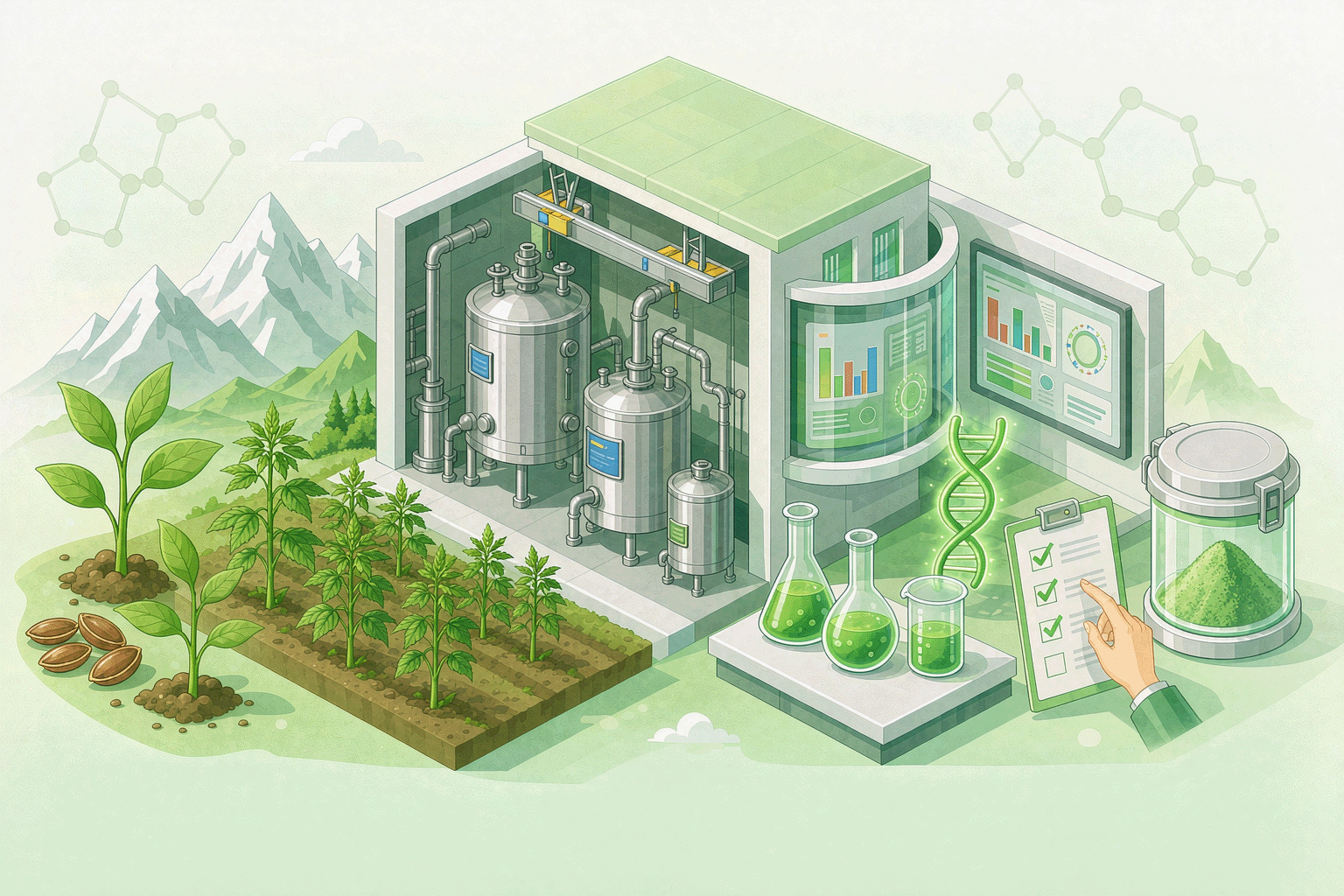
For downstream brands, the biggest worry in Cbd material sourcing usually isn't price — it's whether this supplier can still deliver on time and in volume next year. The cannabinoid supply chain is long: from a single seed to a bag of finished powder, it runs through breeding, cultivation, extraction, purification, testing, packaging and export. If any link breaks, the customer's production schedule gets disrupted.
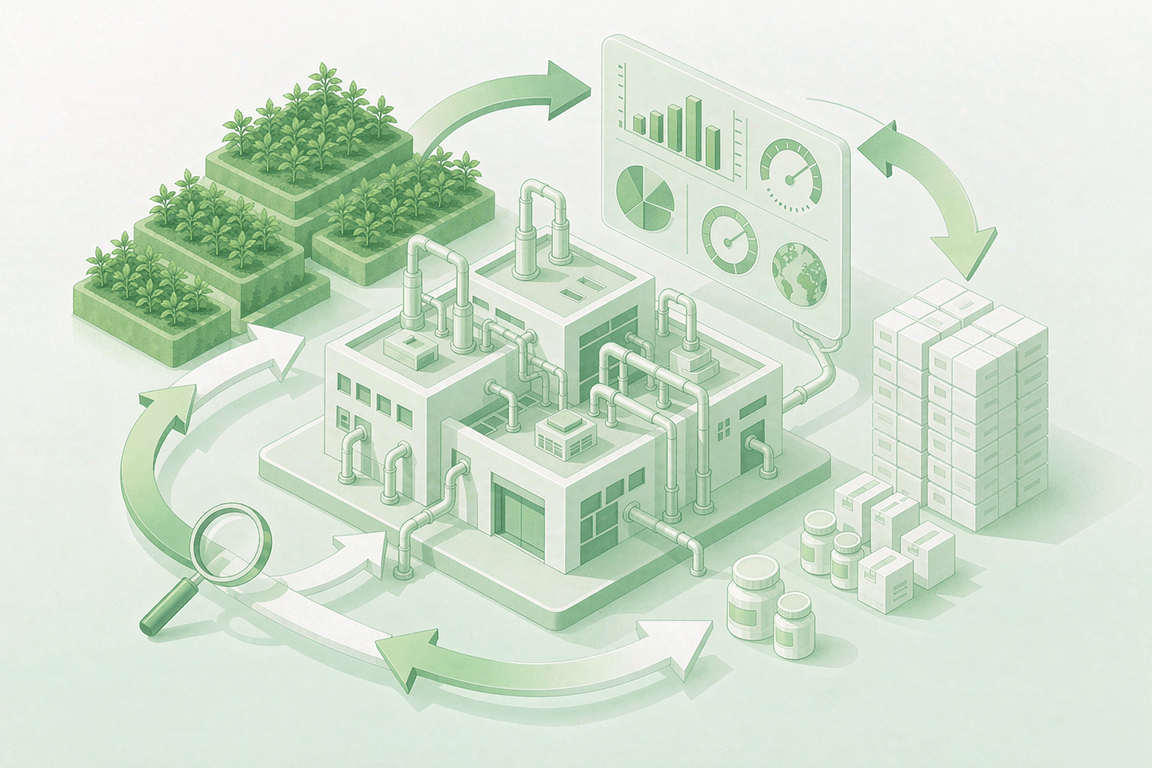
That's why judging a Cbd Supplier by the capacity number on its website isn't enough. What really matters is the structure behind the number: where the capacity comes from, who supplies the raw material, how production is controlled, and how orders are delivered. We'll use Chengzhi Hanmeng Pharmaceutical — a producer of 120 tons of cannabinoid material per year — as a reference, and lay out a checklist buyers can use point by point.
Check Whether the Capacity Number Has Matching Backing
The most common figure in supplier materials is "annual capacity." Chengzhi Hanmeng, for example, reports 120 tons of cannabinoid material per year. But that one number alone doesn't tell you delivery capability. You have to ask: what sits upstream of those 120 tons?
The answer is in the factory's supporting setup: it processes 2,000 tons of Hemp biomass per year, sits on a 54-mu site with 60,000 m² of building area, represents nearly 800 million RMB in investment, and is built to international pharmaceutical GMP and BRC standards. Finished-product capacity, biomass processing capacity and hardware investment only mean something when they sit together. If a company quotes finished-product capacity but can't say how much biomass it handles or what it invested in the plant, take that number with a grain of salt.
Check Whether the Raw-Material Side Is Under Its Own Control
Supply chains usually break upstream first, not at the factory. Extreme weather, fluctuating planted area and varietal degradation can leave an extraction line with nothing to process.
Look at whether the supplier controls the seed side. Chengzhi Hanmeng owns proprietary industrial hemp varieties "Hanmeng 1–6," with CBD levels reported at over ten times mainstream Chinese varieties. Its cultivation base sits at 1,600–2,200 m altitude across about 20,000 mu, with its own breeding station and R&D team steering the cannabinoid profile from the seed. When variety, planted area and field management are all partly in-house, raw-material supply becomes genuinely predictable.
Check Whether the Production System Is Transparent
Large capacity doesn't by itself mean steady delivery. On the same line, low digitalization hurts batch consistency and scheduling transparency. Look at three things here:
First, the production system. Chengzhi Hanmeng built its own MES (manufacturing execution system) and WMS (smart warehouse system), covering raw-material intake through finished-goods dispatch, with over 90% CNC automation. Second, the process: it uses ambient-temperature cold extraction to minimize active-component loss during extraction. Third, the systems background: the plant is built to pharmaceutical GMP and BRC standards, and in 2020 was named a "Yunnan Industrial Internet Three-Transformation Pilot Demonstration Project." Digital systems plus a certified plant are what make batch-level traceability real for the buyer.
Check Whether the Delivery System Fits Your Order Ladder
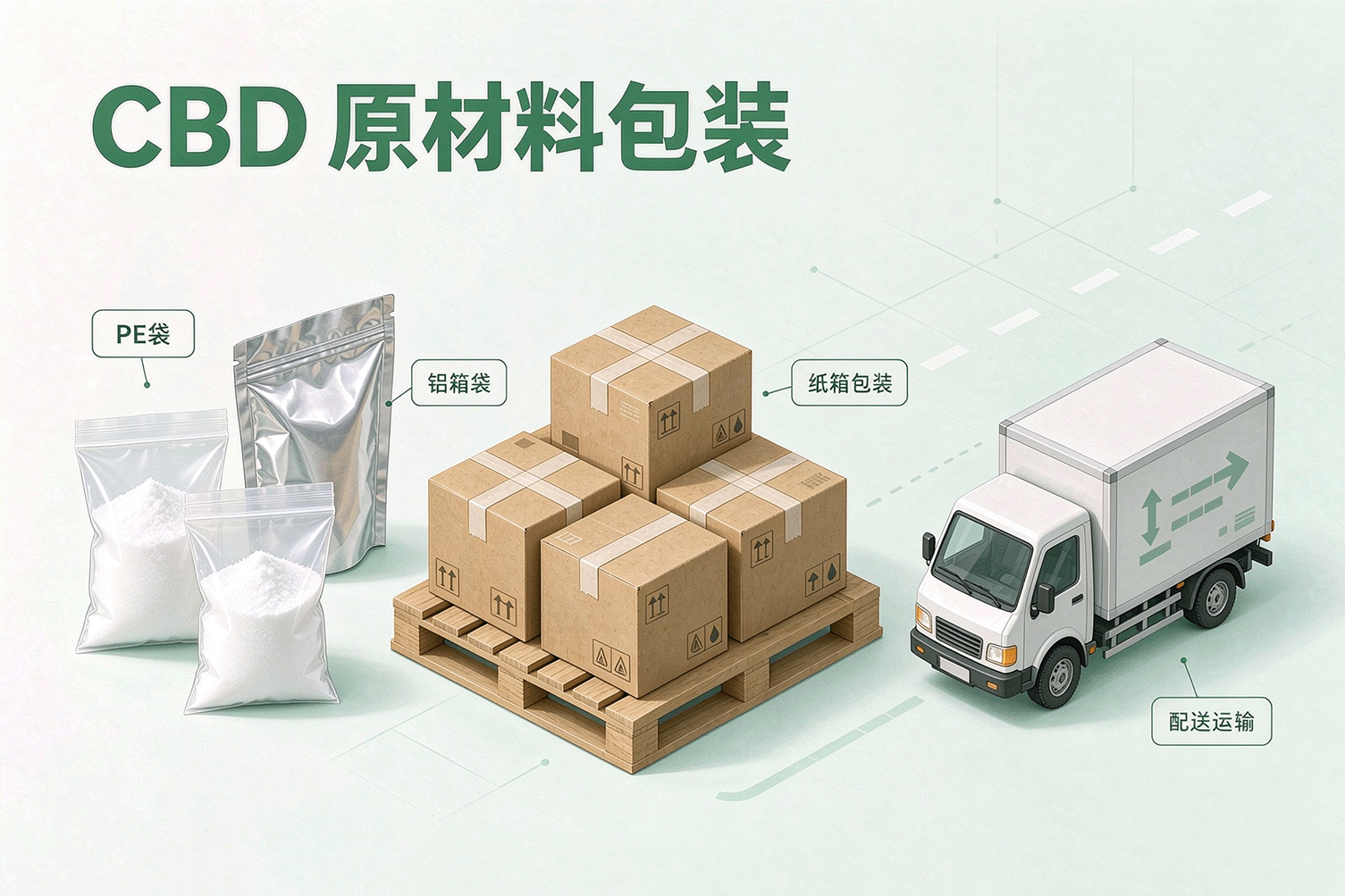
From sampling to mass production, buyer demand comes in stages. How flexible a supplier's packaging and MOQ system is directly affects your cost. Chengzhi Hanmeng's product sheet, for example: samples are 20–30 g, standard pack sizes are 1 kg / 5 kg / 20 kg, and the minimum order is 20 kg. Storage: CBD material generally needs sealed, light-protected, cool, dry and ventilated conditions at 15–25°C; Jp.Grade material, when refrigerated or kept at a constant 20°C dry, has a shelf life of up to 24 months. The packaging ladder sets the bar for sampling and small-batch trials; storage conditions and shelf life decide whether transoceanic shipping and inventory turnover are feasible. Confirm both before signing.
Check Whether the Compliance Licenses Are Long-Term and Complete
In industrial hemp, compliance isn't just a market-entry ticket — it's also a precondition of supply continuity. If a license lapses, even the biggest capacity has to stop. Look at how long the license chain runs: Chengzhi Hanmeng holds the Yunnan Industrial Hemp Cultivation License (including breeding and research), the Yunnan Industrial Hemp Processing License, the Crop Seed Production and Operation License, and the precursor-chemical production filing, covering cultivation, processing and operation. On the market side, its international business focuses on Europe, the US, Japan and Southeast Asia, with established customers including Fortune Global 500 companies. Delivery history is the best time-proven evidence of supply stability.
Closing
"Can they supply?" breaks down into five checkable questions: Does the capacity number have matching biomass processing and hardware behind it? Is the raw-material side in its own control? Is production digitalized and certified? Does the order ladder cover samples through mass production? Are the licenses complete across the chain? Run these through a checklist, and you're in a better position than with any verbal promise of "reliable supply."
Regulatory note: cultivation, processing, import and export of hemp extracts are regulated differently by country and region. Check the applicable local requirements before purchasing or selling.
FAQ
Q1: What's the most overlooked number when evaluating supplier capacity? A: Biomass processing capacity. Finished-product capacity (e.g., 120 tons/year) must be matched by upstream biomass handling (e.g., 2,000 tons of hemp flower/leaf per year). Talking finished-product capacity without raw-material throughput doesn't tell you real delivery potential.
Q2: Why does seed-side control matter for supply stability? A: Raw-material fluctuation is the first source of supply disruption. An in-house breeding station and proprietary varieties (like "Hanmeng 1–6") mean the supplier controls CBD content and material consistency from the source, rather than relying on outside purchases.
Q3: What differs between sample orders and mass-production orders? A: At Chengzhi Hanmeng, samples are 20–30 g, standard packs run 1 kg / 5 kg / 20 kg, and MOQ is 20 kg. Confirm the packaging ladder and MOQ rules from sampling through mass production before signing, so trial runs don't get blocked by minimum-order terms.
Q4: What do MES/WMS-type digital systems mean for the buyer? A: Traceable production, more control over batch consistency, and relatively transparent scheduling. Over 90% CNC digital control is a useful reference for judging whether "big capacity" actually gets delivered steadily.
Q5: Why do compliance licenses matter for long-term supply? A: Industrial hemp licenses run through cultivation, processing and operation. A gap at any link can interrupt the chain. Complete licenses across the value chain are the basic safeguard of supply continuity.
Q6: How should delivery track records be verified? A: Look at the supplier's market coverage and customer type (Chengzhi Hanmeng serves Europe, the US, Japan and Southeast Asia, including Fortune Global 500 companies), and cross-check with batch COAs before committing.