

News
0102030405
What Is CBD Powder? A Complete Guide to Its Definition, Form, and Key Parameters
2026-10-22
People in Cbd raw material sourcing use the term "CBD powder" every day. But ask them to explain in one sentence what it actually is, and many will hesitate. Here's a straightforward breakdown: what CBD powder is, what it looks like, and which parameters matter when you buy it.
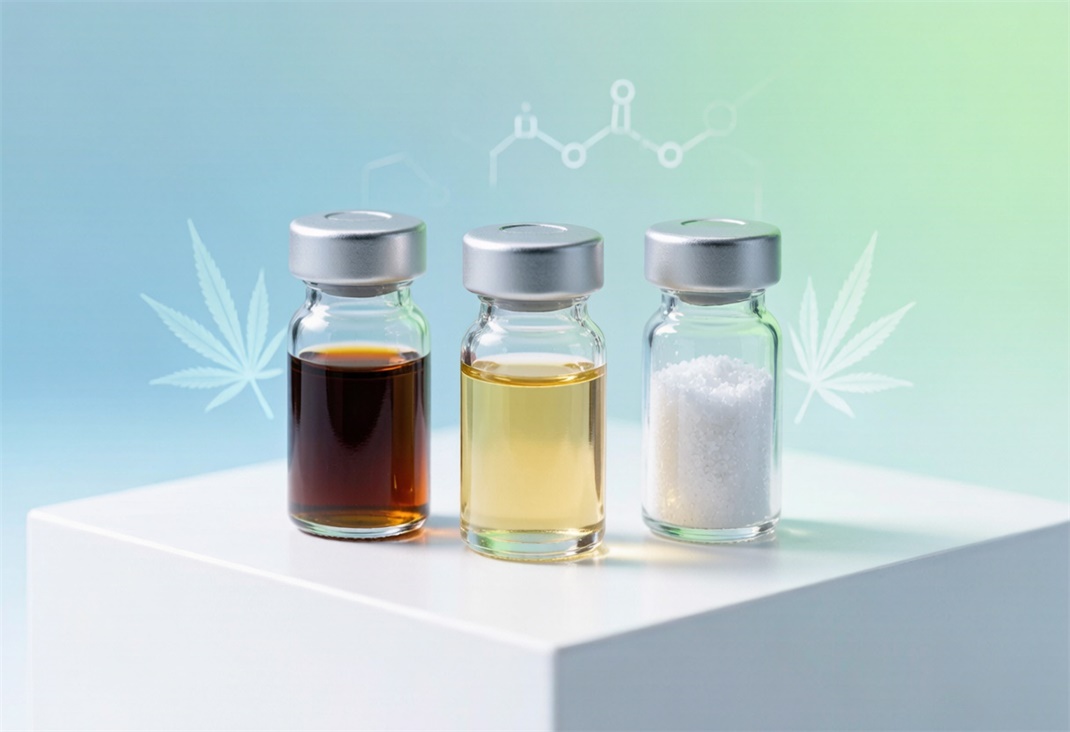
Definition: A Single CBD Molecule Purified to 99%+
The difference from full-spectrum or broad-spectrum oil comes down to composition: the latter two retain multiple cannabinoids, terpenes, and other plant compounds found in the plant. CBD isolate contains only CBD — everything else is removed.
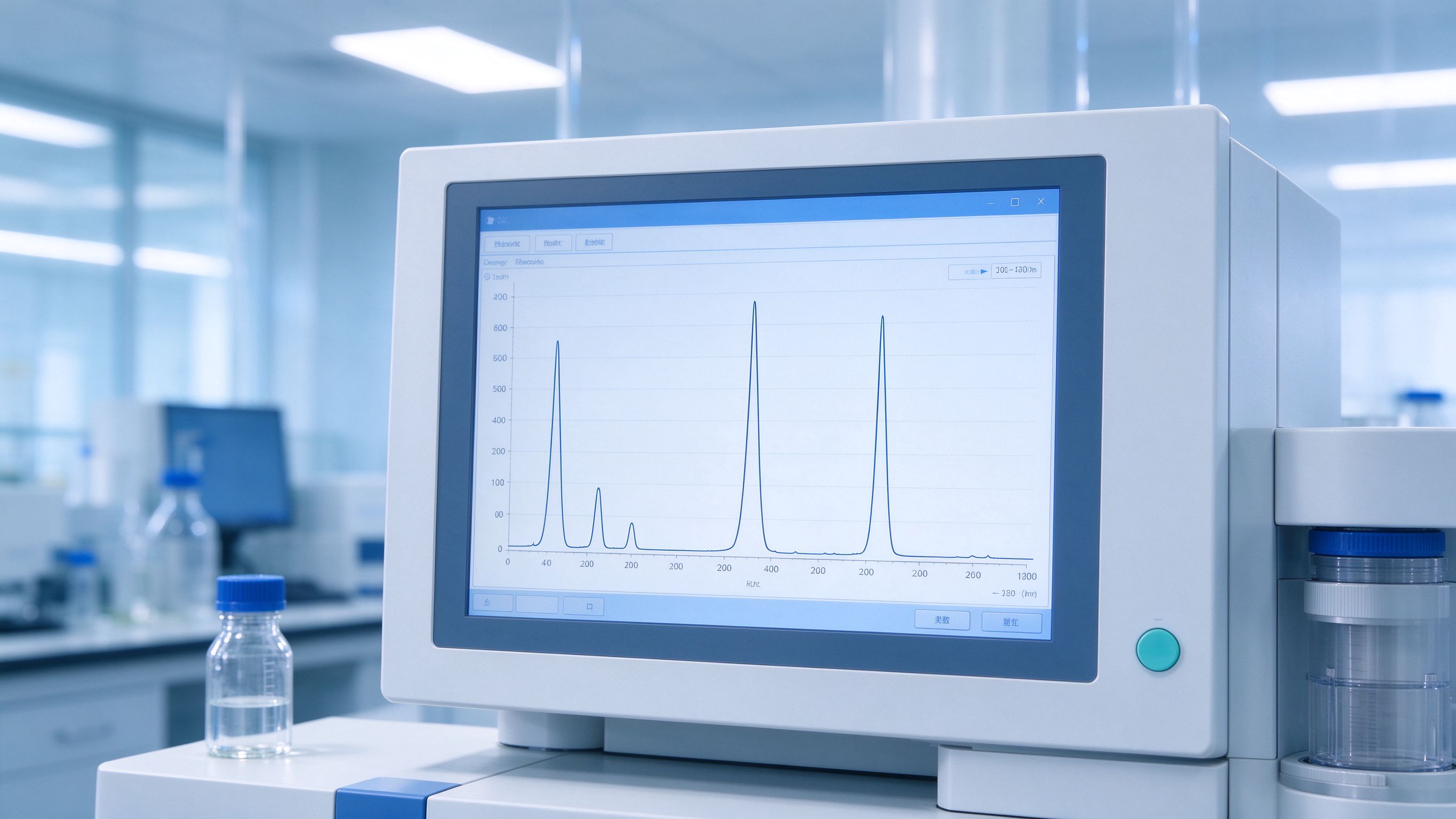
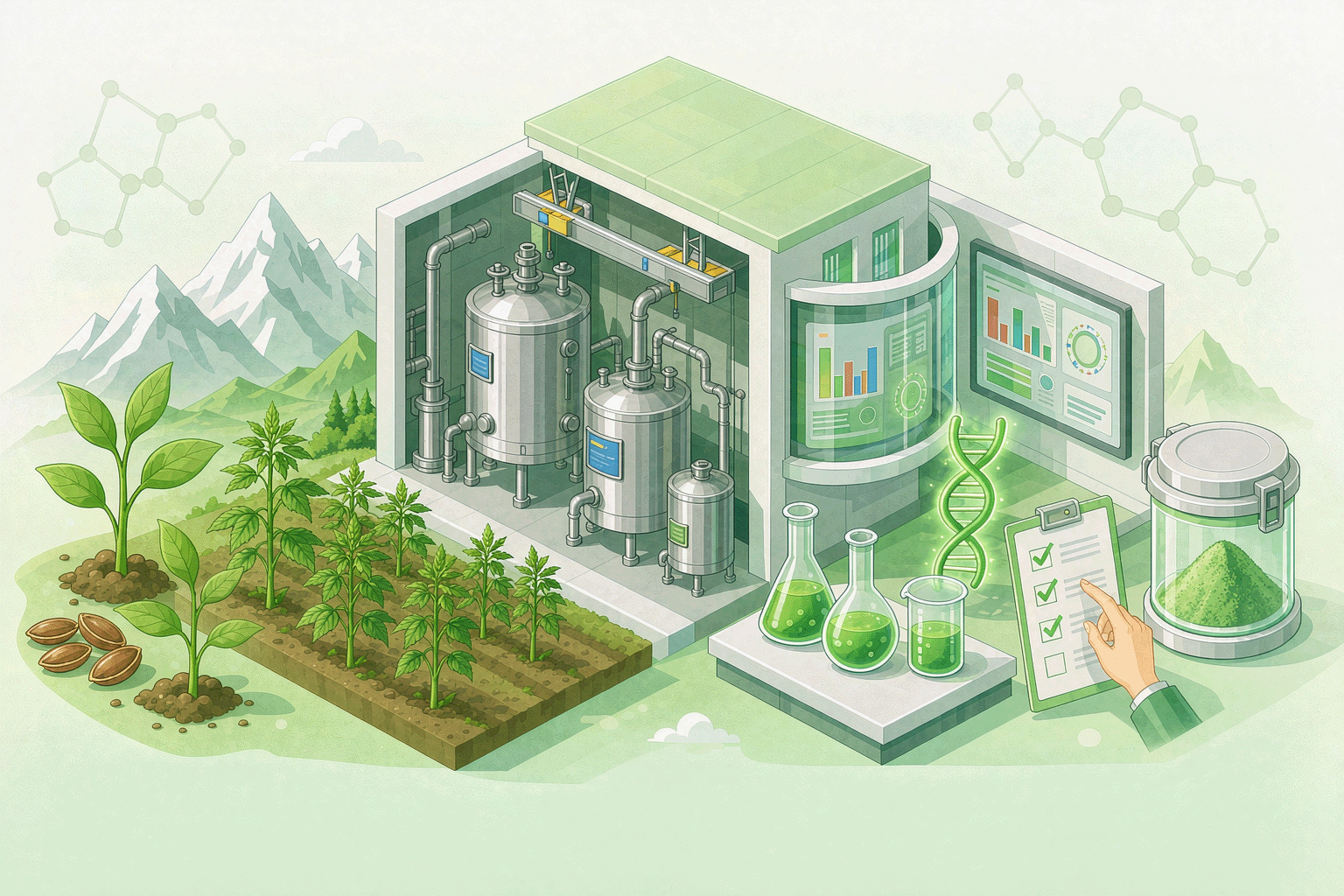
Turning plant material into powder requires a full processing chain: industrial Hemp grown at high altitude is extracted using food-grade alcohol at ambient temperature (cold extraction), purified through multi-stage chromatography, and finally refined by crystallization. So CBD powder isn't ground up — it's crystallized out.
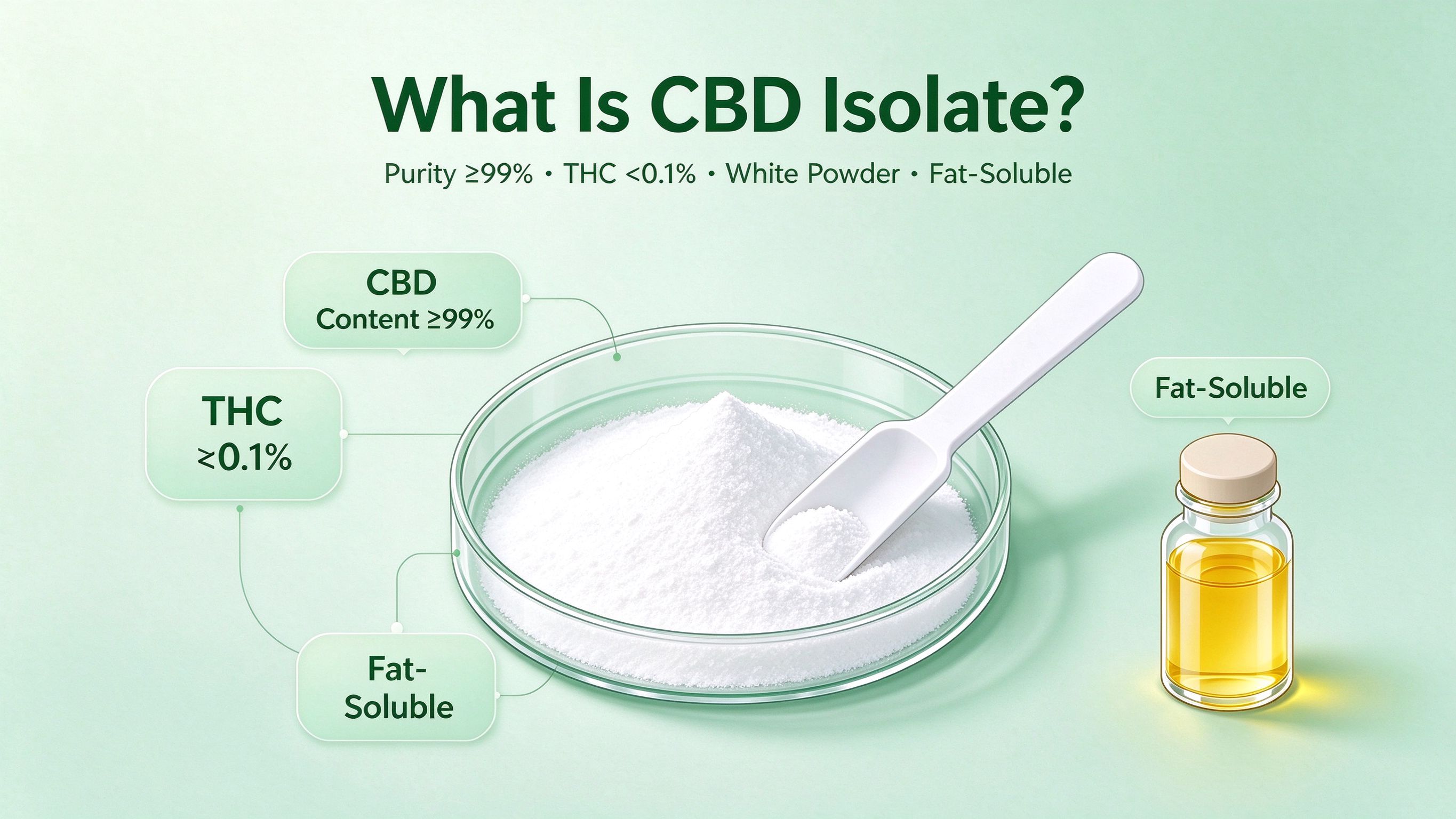
Form: White Powder, No Solvent Odor
Judging the quality of CBD powder takes just two checks: look at the color, smell the odor.
- Look: The product should be a pure white powder. Greyish, yellowish, or discolored material usually indicates incomplete purification.
- Smell: Qualified CBD powder should have no residual solvent odor. Products with inadequate extraction or desolvation carry a solvent smell that's very hard to mask once blended into a final formulation.
Run these two checks first, then move on to the parameters.
Key Parameters: The Three Numbers to Watch
1. CBD content: ≥99%
This is the core specification of CBD isolate. Anything below this threshold doesn't qualify as high-purity CBD powder. Higher content means easier dosage control in downstream formulations and clearer cost accounting.
2. THC content: <0.1% (standard grade)
THC is the psychoactive component in cannabis, and keeping it at minimal levels is the baseline requirement for industrial hemp materials. The standard grade is THC <0.1%, which is the basic entry point for most compliant markets. For exports to markets with stricter THC controls, such as Japan and Korea, a lower grade is required — for example, Jp.Grade brings THC below 10ppm (0.001% level). Always verify against the current regulations in your target market.
⚠️ Note: Legal THC limits vary by country (for example, the U.S. federal threshold for defining industrial hemp is 0.3% on a dry-weight basis). Product specification ≠ legal limit. Always check destination-country regulations before exporting — don't substitute standard grade for low-THC grade.
3. Solubility: Fat-soluble, not water-soluble
CBD powder is lipophilic and will not dissolve in water. In formulation, pre-dissolve it in MCT oil, hemp seed oil, or ethanol before proceeding to the next step. One process rule to remember: avoid prolonged exposure above 80°C in your formulation — this matters especially for formulators working in food and cosmetics.
Two Details That Often Get Overlooked
Certificate of Analysis: Reputable manufacturers send every batch to an officially accredited third-party laboratory for testing covering content, impurities, microbiology, and more. Always request the batch-specific COA (Certificate of Analysis) when purchasing — this is the raw material's health report, and a supplier's word alone isn't enough.
Storage: Keep sealed in a cool, dry, well-ventilated place at 15–25°C, protected from light, and away from strong oxidizing agents. Despite being a powder, CBD isolate is sensitive to moisture, sunlight, and heat — improper storage will degrade quality.
In Short
What is CBD powder? In one sentence: a high-purity CBD monomer powder isolated from industrial hemp, with ≥99% CBD content, THC <0.1%, white in color, no solvent odor, and fat-soluble.
But knowing "what it is" is only the入门 step. What truly tests a supplier is whether they can deliver this consistently, batch after batch. Check the CBD content, check the THC, check the COA, check batch-to-batch consistency — once you're watching all four, you've genuinely understood CBD powder.